Breaking the “Weak Mechanism”: A Personal Transformation Through Junomichi
My name is Pierre and I am 45 years old. I used to practise many sports when I was a student at school and university, and later during my early professional years. Physical activity helped me balance the hyperactive side of my personality and become a better individual within society. I practised Tai Son Viet Vo Dao, and was always very active in football, squash, trekking and running, but that was before.
Over time, I developed what I now call a “weak mechanism”: a tendency to tell myself stories and produce excuses. Little by little, over the last thirteen years, I stopped practising physical activity. It became increasingly difficult to find time for what I once considered an essential part of my life. In short, I was unable to maintain a healthy balance between a very demanding job and my private life. This had a significant impact on both my body and my mind. I relied on my past athletic achievements instead of embracing new challenges.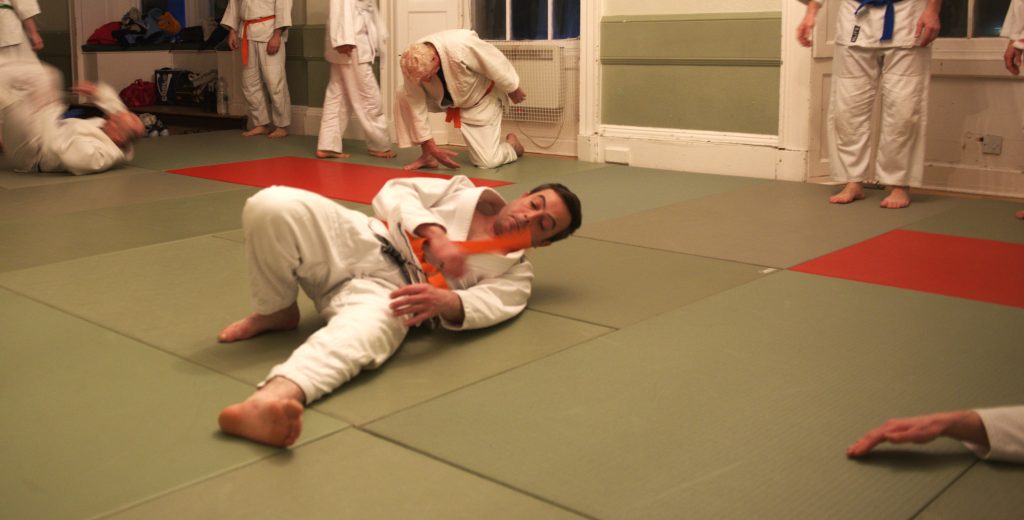
Shoshin
It was my brother Paul who first told me about Junomichi.
I do not remember how he discovered it, but he shared the website with me so we could learn more about the discipline.
Truth be told, I am now convinced that I did not have the right state of mind at the beginning. I was a little confused when I first read the information describing Junomichi and its five principles. I approached it with the wrong mindset, trying to interpret everything through the prism of my past experience in other disciplines; disciplines that had very little in common with Junomichi.
With the small experience I now have, I am convinced that I should have followed the concept of Shoshin: the disciplined attitude of approaching any situation with openness, curiosity and no preconceived ideas, even when one is experienced.
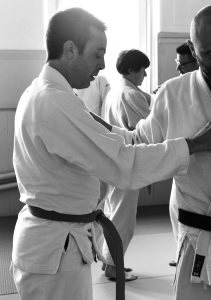
My past experience created a bias that prevented me from starting Junomichi with the best possible mindset, despite my willingness to learn. What I already knew was irrelevant; overcoming my preconceived ideas was my real challenge. It took me some time to understand this, and I believe it is a never-ending process.
One of the excuses I used to avoid starting Junomichi was the belief that, after thirteen years of inactivity, I would not be able to cope with an intense lesson and would collapse on the mat.
I now know that I could not have been more wrong.
Junomichi is giving me the tools to learn what I had never mastered before: Taijutsu. It is the discipline of using the body efficiently, naturally and adaptively in all situations, through posture, balance, coordination, timing and interaction with a partner. Some say it is a lifelong process; it is not a race but a direction.
Along this path, I made a crucial discovery.
The small pains and discomforts that accumulate during the week — back or neck pain, tight shoulders, the consequences of poor work habits, long hours sitting at a computer, or bad sleeping posture — can be relieved with one, or sometimes only a few, Junomichi studies.
I witnessed firsthand how my pain faded much more quickly after practising.
Through my practice, I can also say that Junomichi is a human adventure. Learning from others, sharing knowledge, and doing so within a group of highly diverse individuals is not an easy task. Junomichi reveals to each practitioner what needs to be readjusted within themselves. The impatient naturally gain patience; the less empathetic develop greater understanding of others, and so on.
I now see Junomichi as an essential part of my life a discipline that is making me a better person. (hopefully 😉)
I am taking this opportunity to share a few words of wisdom from Mr Kanō, which speak volumes to me
“It is not important to be better than someone else, but to be better than yesterday.”
Jigorō Kanō